A short guide to the M-65 field jacket
The M-65 Field Jacket is probably the most recognisable field jacket ever made. Designed for the United States Armed Forces in 1965 – hence the name – it replaced the M-51 as the standard issue cold weather jacket.
First deployed during the Vietnam War, it was issued until the late 1980s; it has become a regular sight in casual menswear and movies ever since the early 1970s.
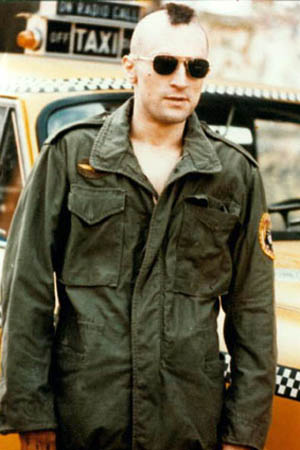
Outside of the battlefields, the M-65 was initially associated with some of cinema’s most famous anti-heroes: Sylvester Stallone wears one in First Blood, and so does Robert De Niro in Taxi Driver. Dustin Hoffman also wears an M-65 while portraying Ted Kramer in the 1979 movie Kramer vs. Kramer, and he’s possibly the first non-veteran character seen wearing one on the big screen.
These days, the M-65 seems to be as ubiquitous as ever, and is often seen on contemporary menswear icons like Alessandro Squarzi and Simon Crompton to name but a few. This popularity came with good reason, as the jacket is extremely comfortable and crafted from high-quality materials. Its purpose-oriented origins are clear right from the choice of fabric, a heavy-duty 100% cotton which makes it extremely sturdy and perfectly suitable for spring and autumn; add the liner, and it turns into a pleasantly warm winter jacket.
Choosing the right M-65 is – luckily – not too difficult. For sixteen years, until 1981, it was only produced in plain green; from that year onwards, a “Woodland” camo pattern was introduced, using the same fabric found on the M-81 BDU (Battle Dress Uniform).
I would personally recommend to hunt down a pre-1981, OG-107 cotton example, as in my view it’s the most versatile and original amongst the many versions. When choosing your M-65, you should pay attention to three main things: the inner label, the zipper(s) and the presence of the liner.
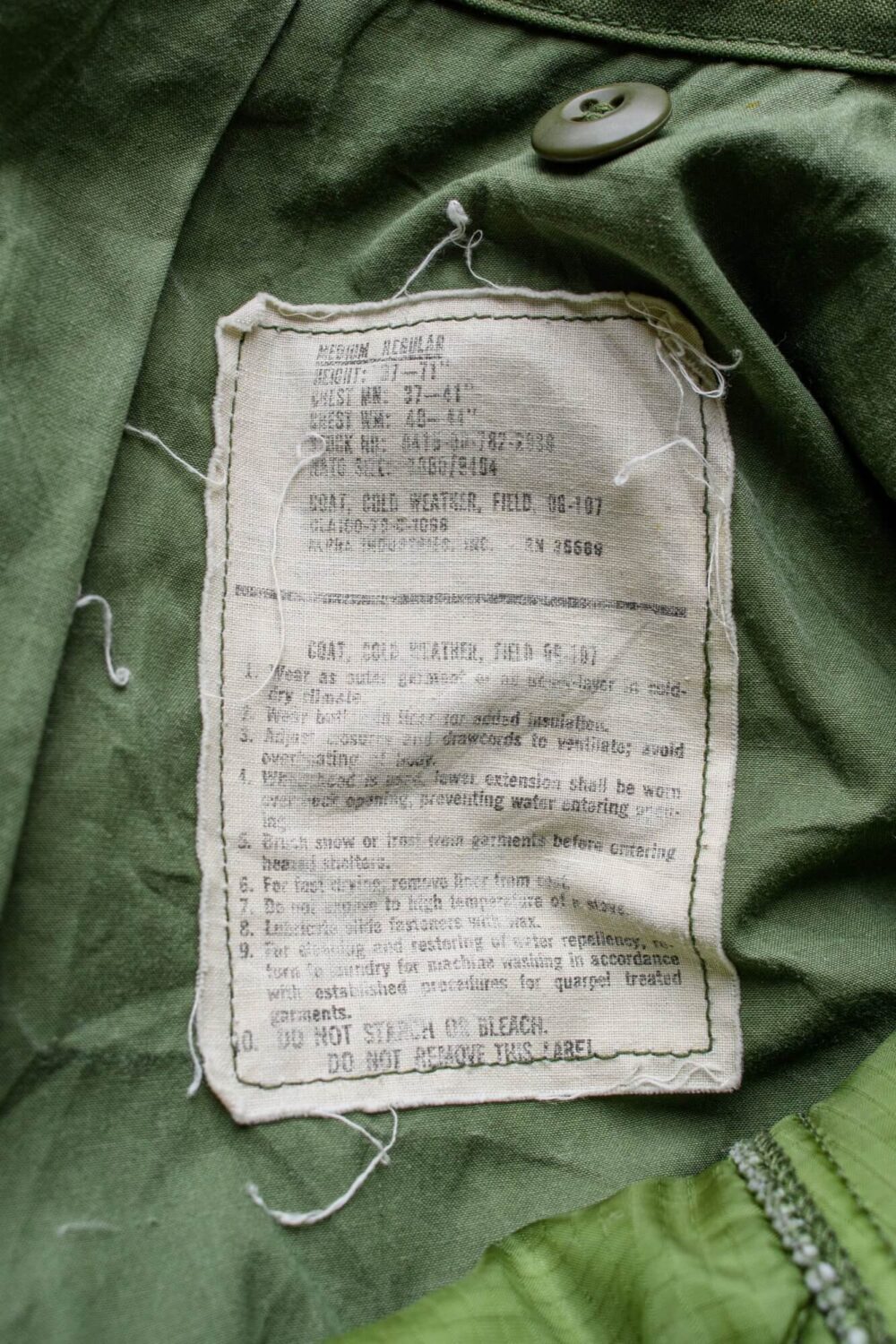
The label is the first and main tell on authenticity: the font and proportions on MilSpec examples – that is, those produced for military supply – are quite easy to identify after you’ve seen some. The original military label indicates the size and length in all capitals (e.g. “MEDIUM REGULAR”), the actual dimensions in inches, the stock number of the jacket and its NATO size. Below are listed ten do’s and dont’s for the correct use and mainteinance of the jacket. The label also indicates ALPHA INDUSTRIES INC, the company that produced all M-65s and still produces several replicas of the original design.
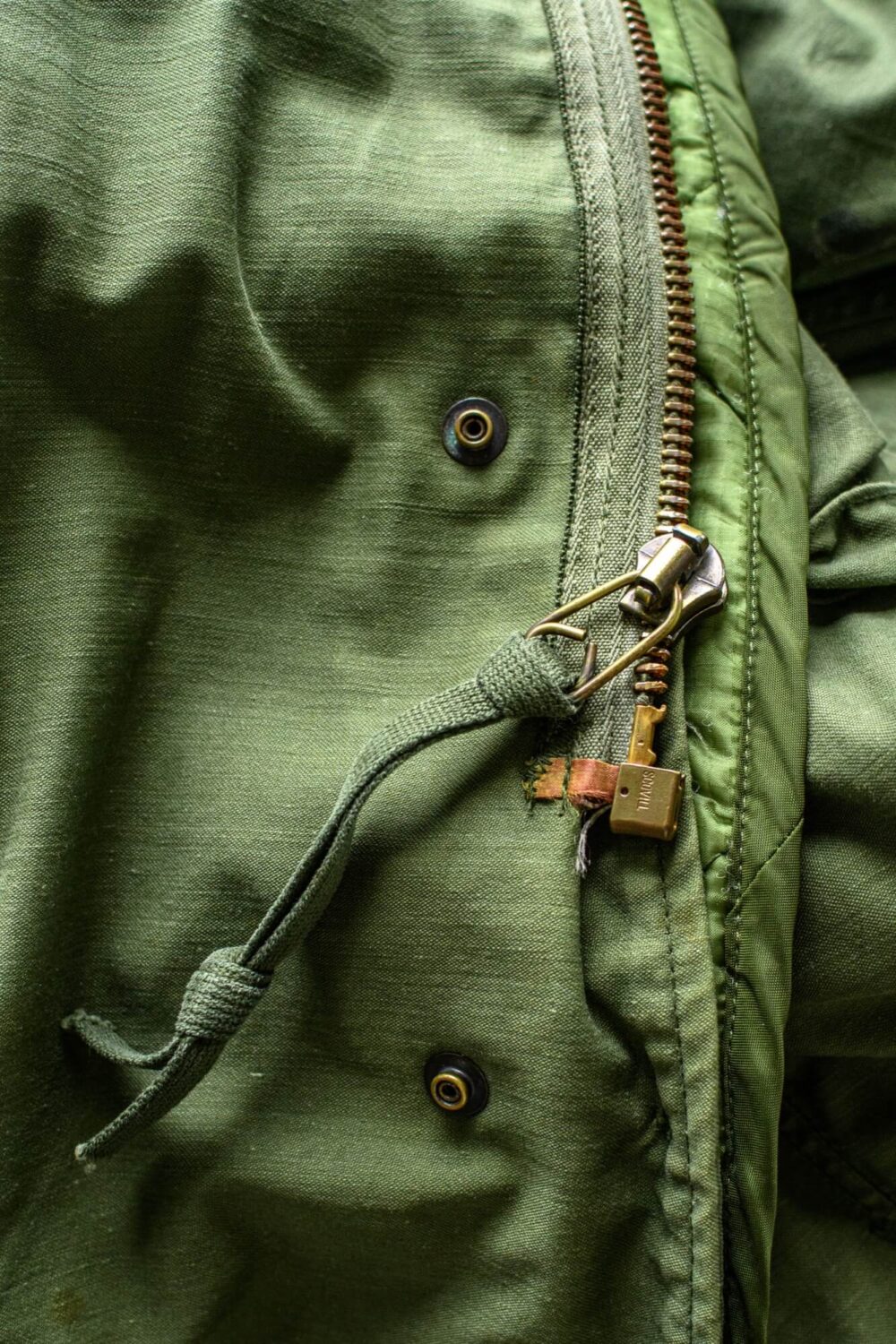
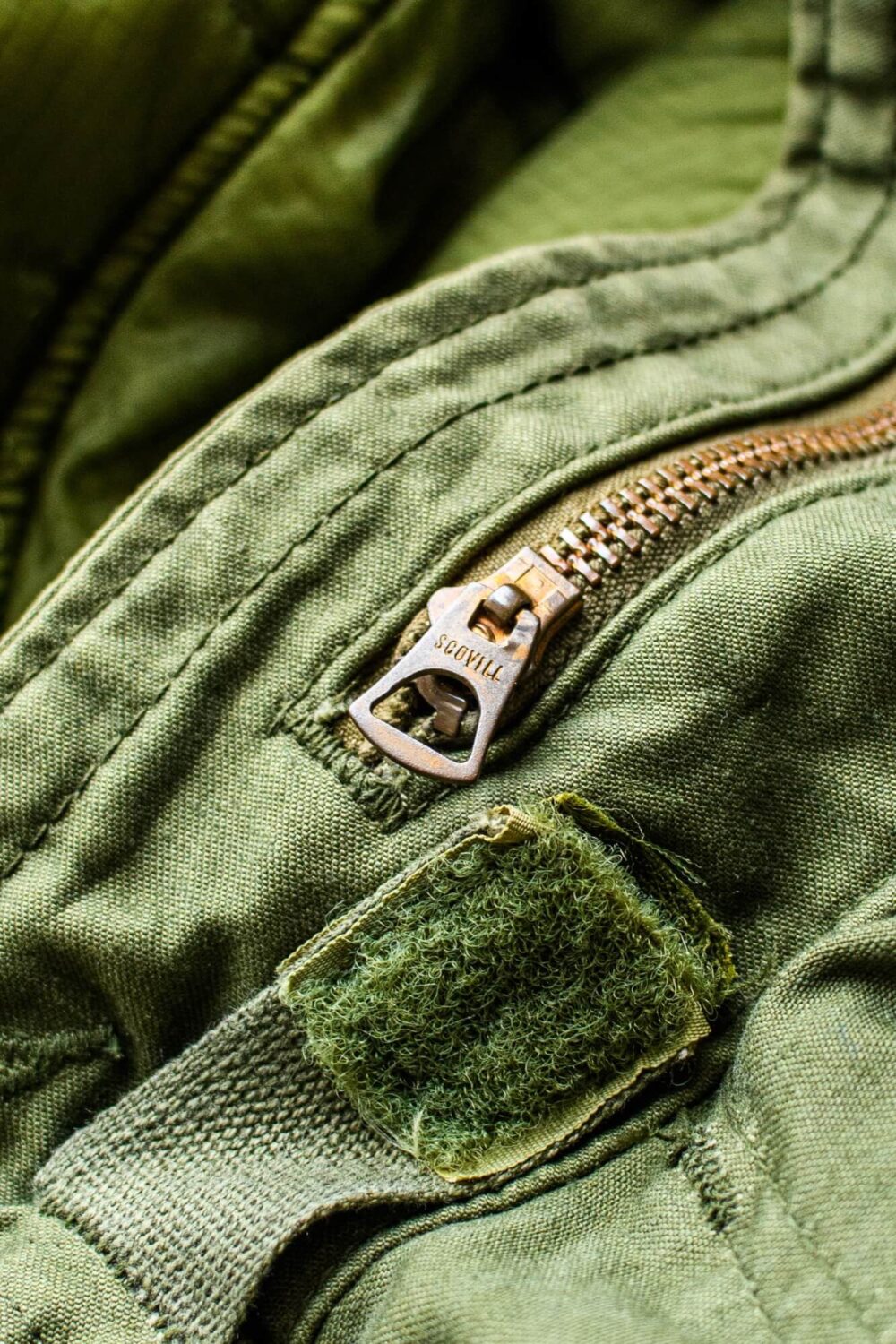
The main zipper varies over the years, but then again, the “original” one you want to find is a Scovill-made in either aluminium or brass. Aluminium ones are extremely rare, as they were only fitted to early jackets, while brass ones are fairly common and have a peculiar shape which is immediately recognisable. Don’t forget to check the zipper behind the collar, too, as it should also read Scovill on the pull tab.
Finally, the liner has a wavy pattern, comes in a green nylon fabric which is way brighter than the jacket’s outer shell, and is secured by means of buttons – two below the collar, three per side on the front and two per wrist inside the sleeves. Not all jackets you find for sale will have the liner, but ideally you want to find a complete example, as it will save you some money and the possible stress connected with tracking down a liner in the correct size.
Finally, let’s look into how much the M-65 jacket costs. As I’m writing this brief guide, in March 2024, the price range for a good conditions, all correct example seems to fall anywere between 140 and 200-ish Euro, or 150 to 210-ish USD. What makes figures vary the most are the presence or lack of patches, with plain jackets usually retailing for less, and examples with name tags and/or division insignas on the sleeves being priced higher.
Leaving the cost aside, and assuming you’re not buying as a militaria collector, but as a menswear enthusiast, details are absolutely a matter of personal taste. I was definitely happy with mine, which has no tags or patches: I feel it goes better with my everyday style, and I fear emblems would make it too flashy. But as I said, if you like patches better, go for it – just expect to pay a little premium.
As a closing note, remember that when buying vintage, the key for a good score is not rushing into the buy: this is especially true in the case of M-65s, which are luckily rather easy to find and give you plenty of options. It’s better to wait a bit more and be happy forever, than regretting an impulse purchase that leaves you unsatisfied after the thrill is gone.